


In the field of architectural metal roofing, the processing of ridge tiles, curved panels, and shaped components has always been a critical factor affecting project progress and waterproofing quality. For a long time, the construction site has predominantly relied on a “manual cutting + bending machine” operation mode, which not only entails high labor intensity and low efficiency but also faces challenges such as uneven cuts, large overlapping gaps, and high labor costs.
With the iterative advancements in cold bending technology, Full Automatic Hydraulic Metal Roof Tiles Bending Machine (also known as ridge tile machines or arc-pressing machines) are becoming a “game-changer” for engineering teams and steel structure enterprises.

Application scenario: Widely adaptable to assist green buildings
With the increasing penetration rate of steel structure buildings, the application scenarios of roof tile bending machines are becoming increasingly widespread
• Large venues and industrial plants:
The circular arc plates produced can be used as load-bearing components for roofs/walls, with a span of up to 12 meters or more, without the need for additional support, and are widely used in sports venues, exhibition centers, and large factories.
• Civil buildings and simple steel sheds:
The ridge tiles produced by the equipment are aesthetically pleasing, durable, and fully meet fire prevention regulations and waterproof requirements. They are suitable for various types of residential buildings, warehouses, and simple steel sheds.
• Emergency and temporary buildings:
Lightweight circular arc boards are lightweight (about 5-8kg/㎡), easy to transport and install, and are an ideal choice for mobile board houses, temporary warehouses, and disaster relief resettlement houses.

Product Attributes :
|
1
|
Machine frame
|
Middle plate with H shape steel beam
|
|
2
|
Material thickness
|
0.3-1.0mm
|
|
3
|
Material of forming mold
|
Cr12 quenched steel
|
|
4
|
Hydraulic oil pump press
|
32 mpa
|
|
5
|
Voltage
|
415 v 50hz 3phase or customize
|
|
6
|
Feeding equipment
|
1) Motor power: 5.5kw
2) Chain transmission 3) DC motor: calculates arc length automatically |
|
7
|
Hydraulic system
|
1) Advanced hydraulic system
2) Power: 4kw |
|
8
|
Automatic control system
|
1) Screen: 5.7 inch DELTA screen from Taiwan
2) PLC: DELTA from Taiwan |
|
9
|
Option
|
1. Mould Cassette design for future quick exchanging
2. Servo Motor with reducer for crimping curved machine 3. Concave curving tools |
Core Advantage: “Cost Reduction and Efficiency Enhancement” Empowered by Technology
The modern roof tile bending machine is not a simple mechanical replacement, but a comprehensive solution that integrates hydraulic drive, intelligent sensing, and numerical control technology. Its core advantages are reflected in the following three dimensions:
1. Flexible and versatile molding ability
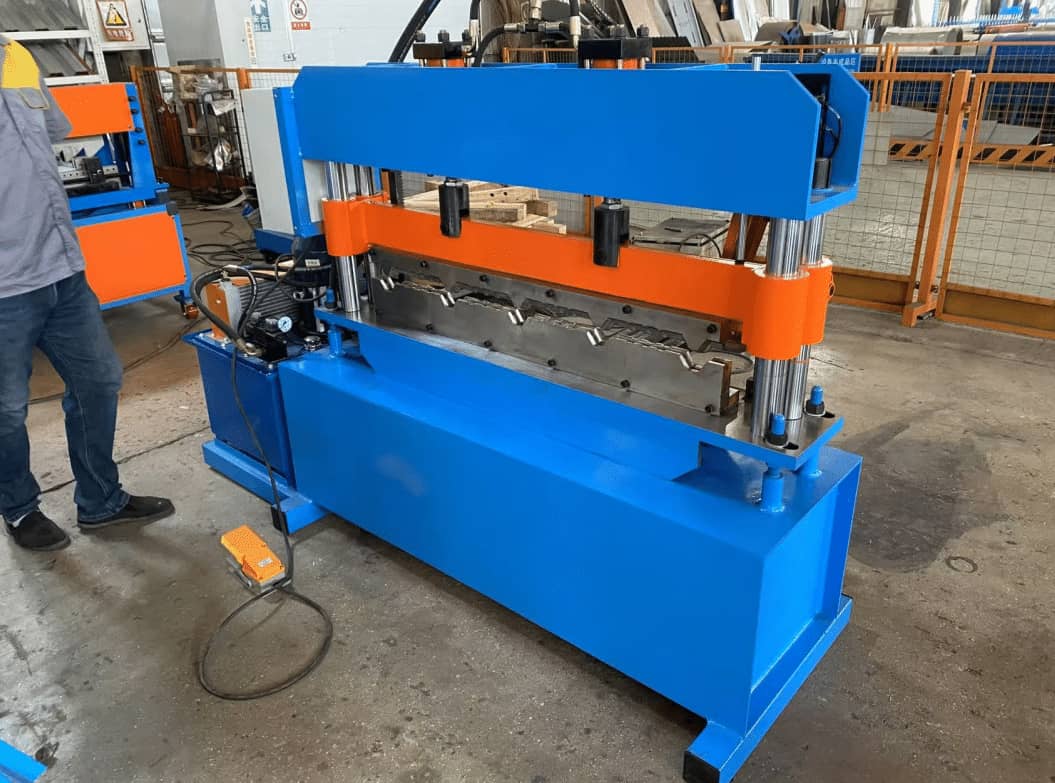
Advanced equipment on the market has high customization capabilities for different building needs. For example, some models are equipped with automatic translation and opening functions, which can easily adapt to the needs of different plate heights and roof heights; Some devices adopt a dual shear head design, which can produce tablets and control the curvature size by adjusting the pressing distance, achieving “one machine for multiple uses”. Whether it is positive arc, reverse arc or complex shaped parts, they can be processed quickly and accurately.
2. Excellent machining accuracy and durability
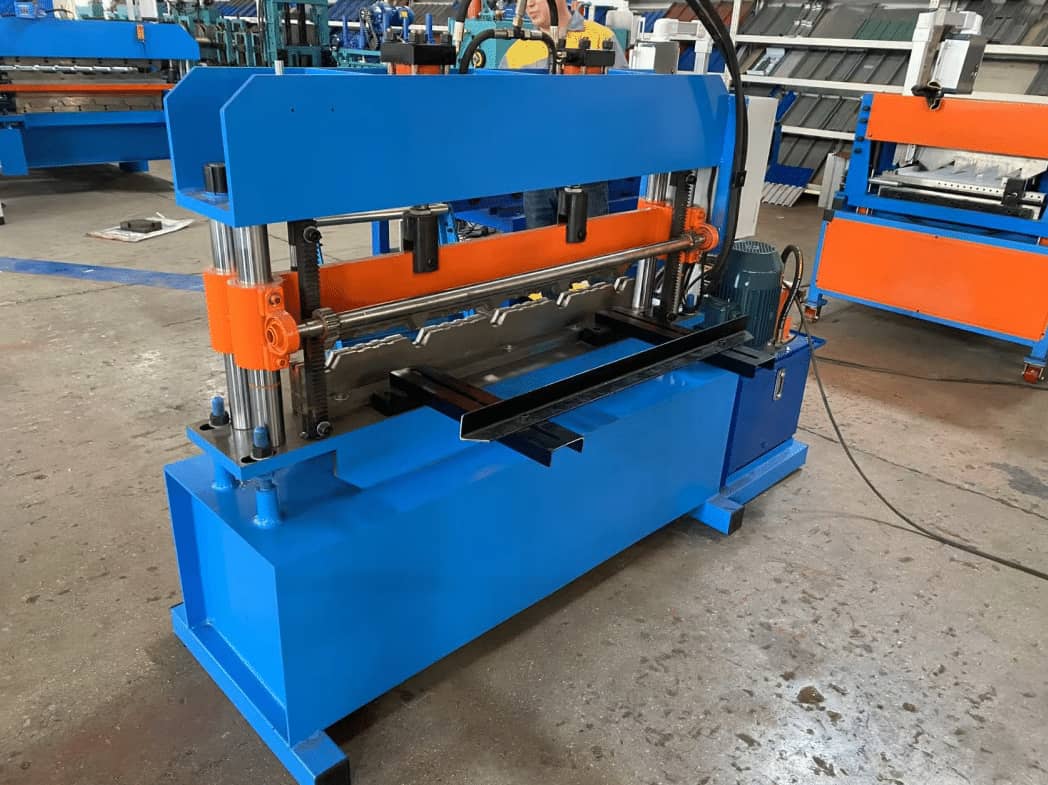
High quality equipment usually uses rollers made of 45 # steel or Cr12MoV material, which undergo CNC precision machining and high-frequency quenching treatment to ensure that the forming accuracy is controlled within ± 0.5mm. For high hardness materials such as stainless steel, some models have specially strengthened the four column hydraulic shearing unit to ensure stable forming pressure during continuous operation, prevent lateral deviation, and ensure that the finished plate has a standard curvature and no scratches on the surface.
3. Significant economic benefits
The cold bending process does not require heating, and the yield strength of the plate is stable. Thin specification plates (such as 0.3mm color steel plates) can be used to achieve the same load-bearing performance. Compared with traditional welded or cast parts, the material cost can be reduced by 15% -25%. At the same time, CNC fixed length cutting technology avoids the “one size fits all” waste of manual cutting, and can save tens of thousands of yuan in material costs for a single project.
