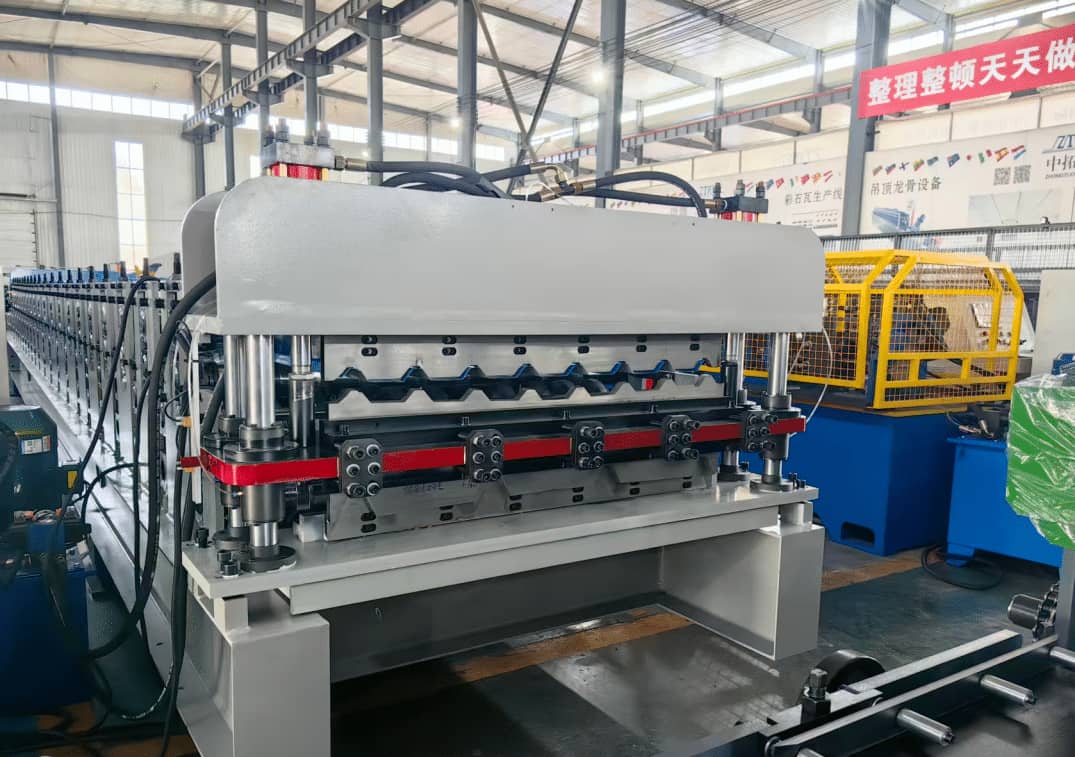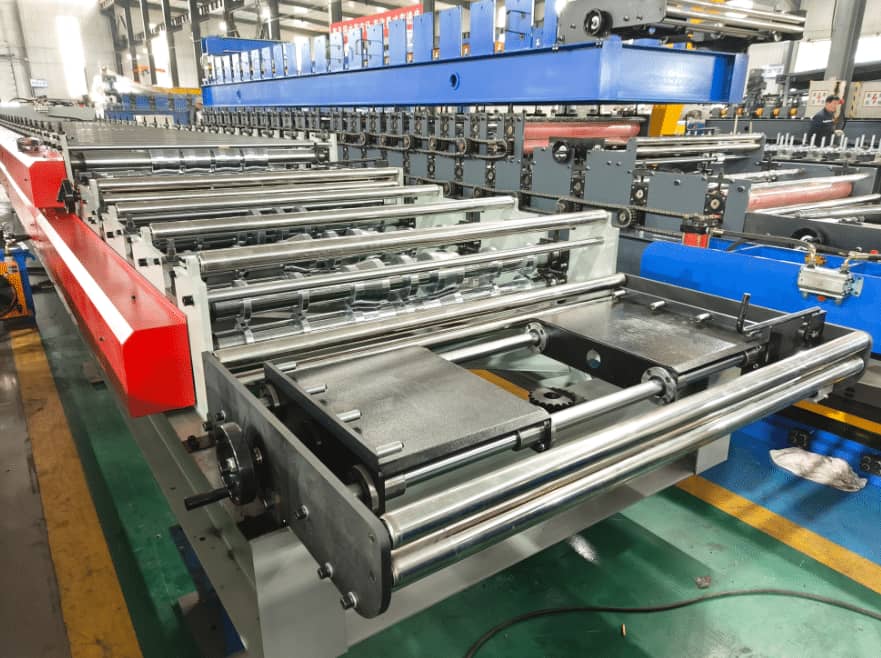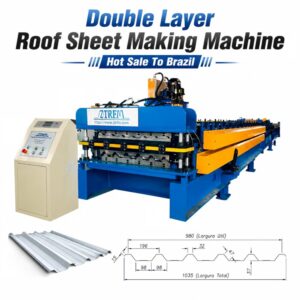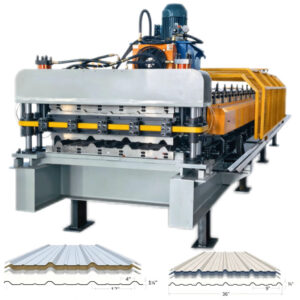
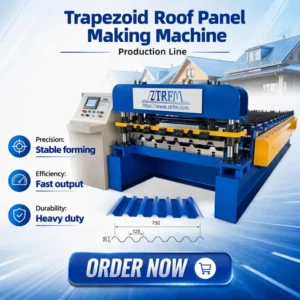
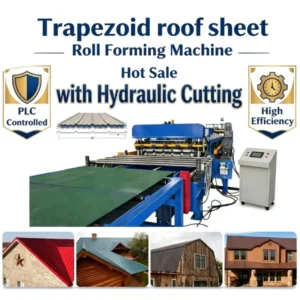




Double Layer Roof Trapezoidal Sheet Roll Forming Machine is an integrated, high-precision cold bending equipment specifically designed for producing high-strength, lightweight trapezoidal roof tiles. Its core advantage lies in the integrated forming capability of the double-layer structure, efficiently transforming steel coil plates into trapezoidal cross-section tiles through a precision roller system, combining excellent load-bearing performance with waterproof characteristics. This equipment significantly enhances production efficiency, substantially increasing single-line output compared to traditional processes while reducing energy consumption and waste rates, meeting the urgent demand for green manufacturing in modern construction. In practical applications, it is widely used in large-span industrial plants, public venues, and multi-story buildings, serving as an ideal alternative to traditional roofing materials.

Product Attributes :
|
1.Formed Material
|
GI,Steel
|
Thickness:0.3-0.6mm Width:1220mm (as request)
|
||
|
2.Decoiler
|
Hydraulic automatic decoiler
|
Manual decoiler(will give you as free)
|
||
|
3.Main body
|
Roller station
|
20+24rows(As your requirement)
|
||
|
Diameter of shaft
|
80mm solid shaft
|
|||
|
Material of rollers
|
45# steel, hard chrome plated on the surface
|
|||
|
Machine body frame
|
400 H steel
|
|||
|
Drive
|
Chains transmission
|
|||
|
Dimension(L*W*H)
|
15000*1800*1600(customize)
|
|||
|
Weight
|
15T
|
|||
|
4.Cutter
|
Automatic
|
cr12mov material, no scratches, no deformation
|
||
|
5.Power
|
Motor Power
|
5.5KW
|
||
|
Hydraulic system power
|
5.5KW
|
|||
|
6.Voltage
|
380V 50Hz 3Phase
|
As your requirement
|
||
|
7.Control system
|
Electric Box
|
Customized(famous brand)
|
||
|
Language
|
English(Support multiple languages)
|
|||
|
PLC
|
Automatic production of the whole machine. Can set batch, length, quantity, etc.
|
|||
|
8.Forming Speed
|
15-20m/min
|
The speed depends on the shape of the tile and the thickness of the material.
|
||
Technical Features and Innovative Breakthroughs
1.Double-layer structural design
The equipment employs synchronous forming technology for upper and lower layers, precisely controlling roller pressure and speed through an electronic control system to achieve seamless bonding of the two layers of tiles. This design not only enhances the overall stiffness of the tiles but also optimizes load distribution, enabling the roofing system to withstand greater spans without deformation. For instance, at connection nodes, a special locking mechanism ensures tight interlocking between tiles, effectively preventing separation risks caused by external forces.

2. High Precision and Automated Control
Equipped with advanced pulse encoders and hydraulic solenoid valves, the device supports real-time adjustment of sheet length and waveform parameters, with forming accuracy errors controlled within a minimal range. The operation interface integrates an information management module, enabling single-board cutting and production data tracking, reducing manual intervention and enhancing product consistency. Additionally, the automatic shutdown function for non-working layers significantly lowers standby energy consumption, reflecting a design philosophy focused on energy efficiency.

Application scenarios and market value
• Industrial and commercial buildings
In large-span factories, warehouses, and logistics centers, the roof system produced by double-layer trapezoidal tile equipment can achieve column free space of over 30 meters per span, greatly improving the flexibility of internal layout and the efficiency of cargo storage.
• Public facilities and green engineering
Suitable for public venues such as sports halls and exhibition halls, its lightweight design reduces structural loads while meeting fire prevention, insulation, and other regulatory requirements. In the field of new energy, such as photovoltaic power plants or environmental protection facilities, the tiles produced by the equipment can integrate light transmission and insulation functions, helping to achieve sustainable building goals.
• Cost effectiveness and industry impact
Through double-layer integrated production, the equipment reduces raw material waste and labor input, and the overall cost is significantly reduced compared to traditional single-layer machines. Its modular design supports rapid maintenance and upgrades, extends equipment lifecycle, and provides manufacturers with cost-effective investment options.